Spanish Sojourn

a travel blog of our trip to Spain .....

Friday, April 21

Marbella

Blimey ........ we missed the fun and games by a week or two. Police have been all over the town brandishing guns as the Mayor, a woman wouldn't you know, was arrested for questioning about financial irregularities and misappropriation of funds. According to Sur she was in bed recovering from liposuction at the time of her arrest! It could only happen in Marbella! 19 other councillors were hauled in too and are still behind bars. Stacks of cash have been found in some of their houses.

Worse still, the beach is shrinking back to its original rocky shoreline. No sand has been imported for some years. Cars are parked willy nilly all over the beach approaches because the franchise for towing cars away is under investigation.

But its good to be back. My daughter and grandchildren have joined us and we are enjoying what is left of the beach, building lots of sandcastles while we can! :-)

Sunday, April 16

Malaga

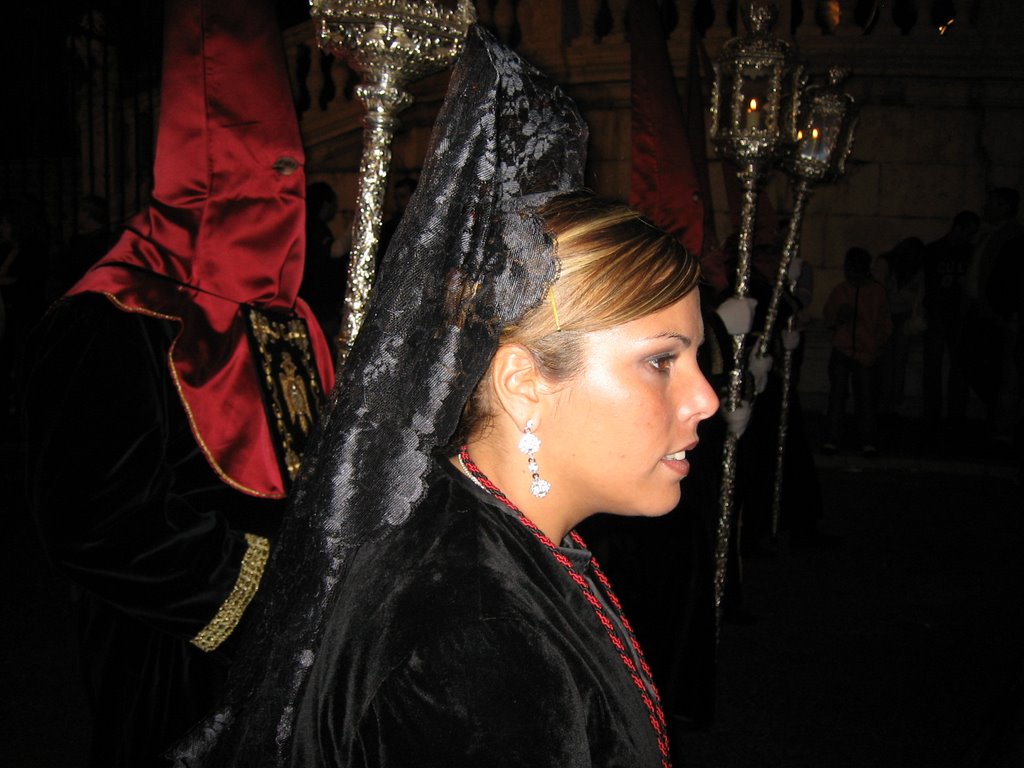
a beautiful girl wearing her Mantilla in Malaga.  Easter 2006
Our final couple of days before the familiarity of Marbella is reached was spent in Malaga. We have always said we should spend some time in Malaga instead of just rushing past it on our way to or from the airport, usually at unearthly times of the day or night, and I am so glad we did. It is a delightful city and we have had an amazing time.

Malaga is the capital of the Costa del Sol. It is one of the most important cities in Southern Spain. It's port saw trade with the ancient Phonecians - all that purple dye stuff - and it exported a fish paste it produced which was highly sought after by the Romans. Moorish Gibralfaro castle is high on the hill overlooking the town. In the town itself the huge Cathedral dominates, it was built between the 16th and 18th centuries. Malaga is also the hallowed birthplace of Picasso.

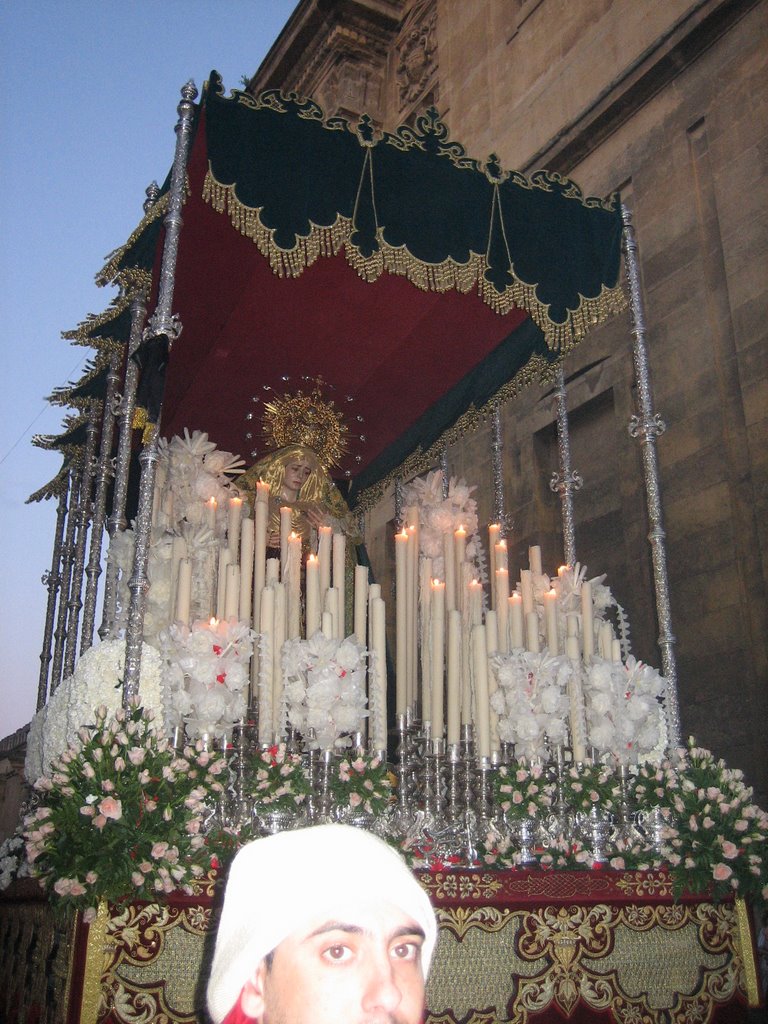
Thank goodness we reached our hotel relatively early after the short hop from Cordoba. Soon queues of cars built up, all patiently waiting to get into the city centre car parks. Thursday is the most popular of the Santa Semana processions and one of the longest, starting at about 5.oo in the afternoon and finishing at 5.00 the next morning. We managed to stay the course until 2.00 am. and considering we had fitted in a trip to the fairly new Picasso Museum in the afternoon I think that was pretty good going!

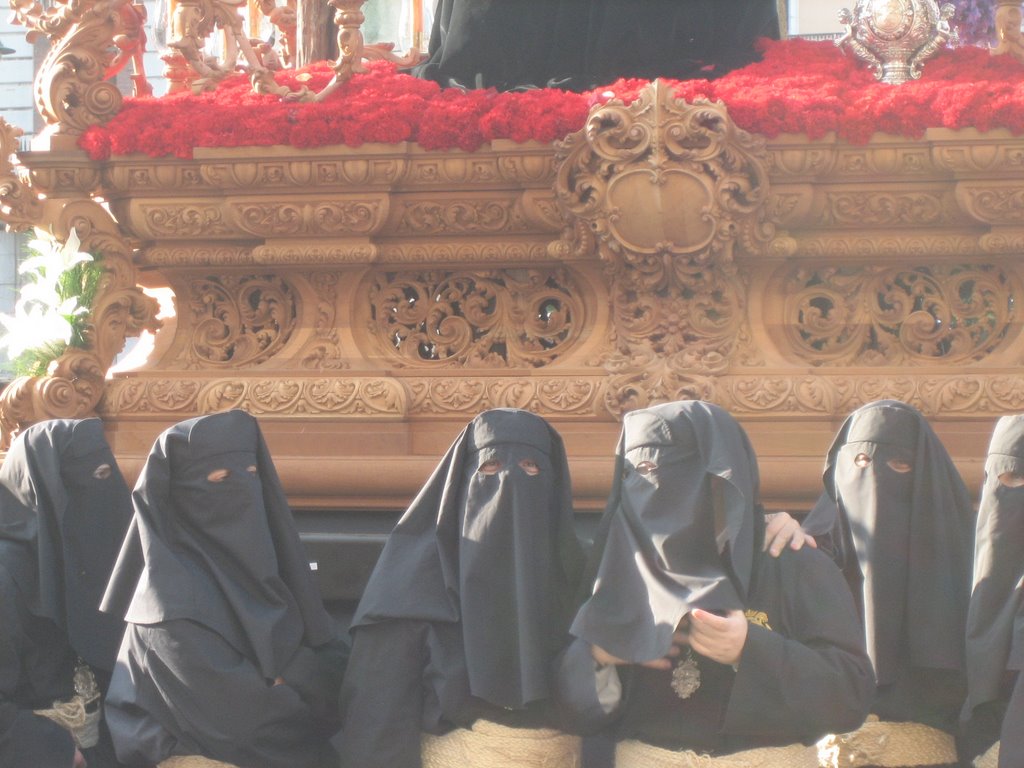
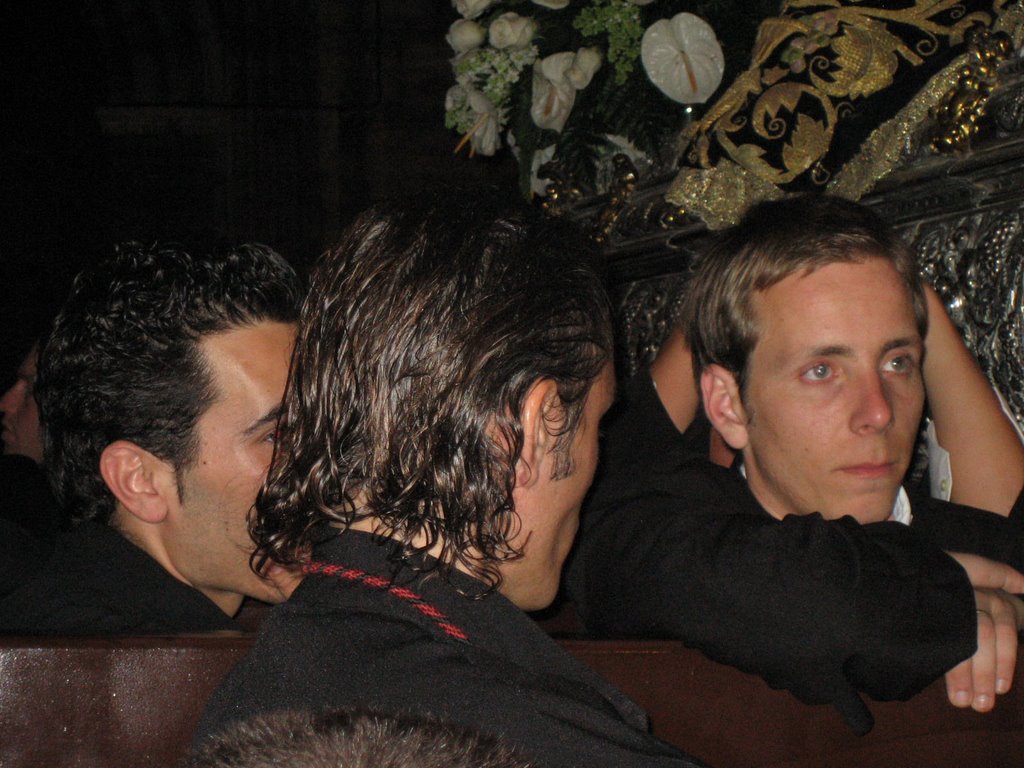
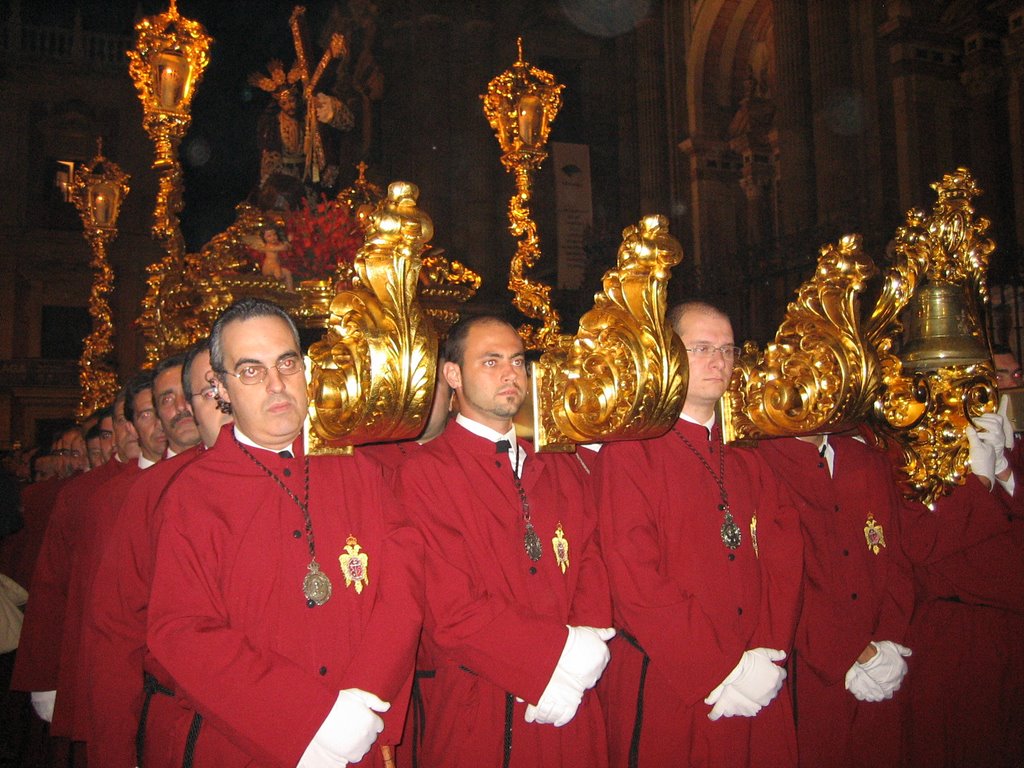
The first Tronos is Mary, looking so sad, but beautiful, surrounded by flowers, preceded by swinging incense burners, and carried by the cofradía Santa Cruz. The two guys in the photo spotted me with my camera - and I was well back, behind tiers of seating. They posed for me in one of the frequent respite stops the bearers have to make. They were having such a good time in spite of the heavy work. Who knows, they could be some of the famous people that belong to the various cofraías! The second photo here below, again a respite halt, show three young guys verging on exhaustion after carrying their tronos well into the night.
Mr Famous, Santa Cruz, Malaga, perhaps?
Exhaustion, Santa Semana, Malaga
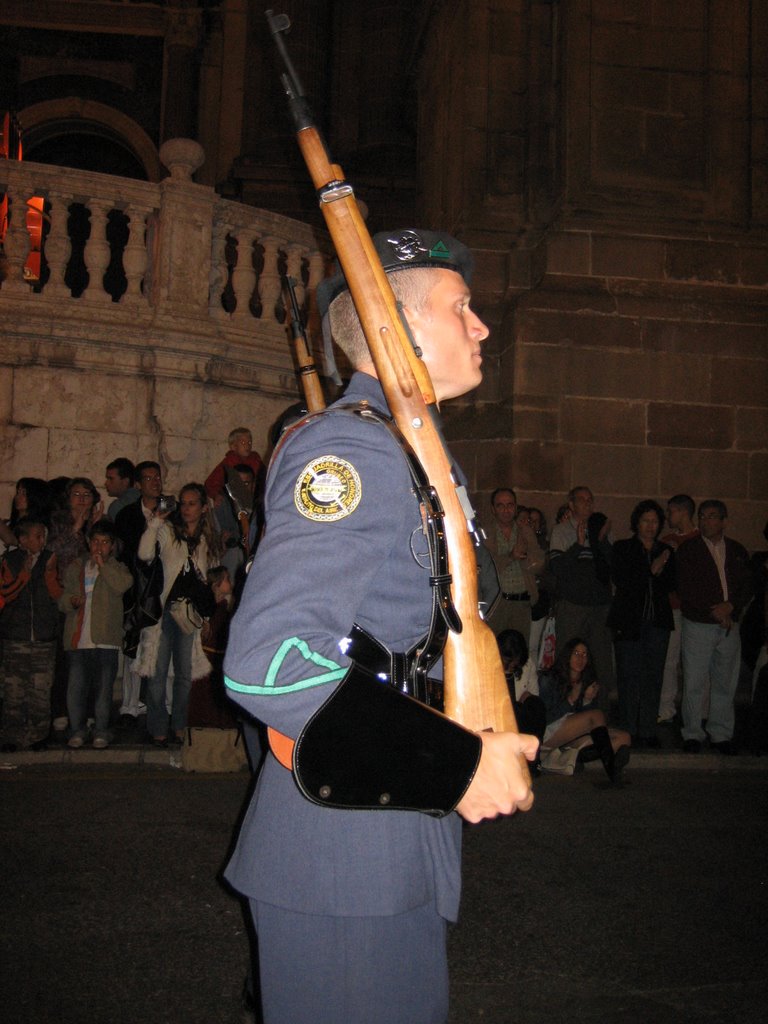
The Forces were represented in the Holy Thursday Santa Sermana parade as well. This guy in the photo below had an axe on his back and the Esquadrilla de Honores he was part of carried out a stunning series of movements with their rifles, swinging them around with tight precision - this special particular guys' task make all the harder by my camera flashes, but he didn't loose his concentration once! Nice - very!
Esquadrilla de Honores
Santa Semana, Malaga 2006
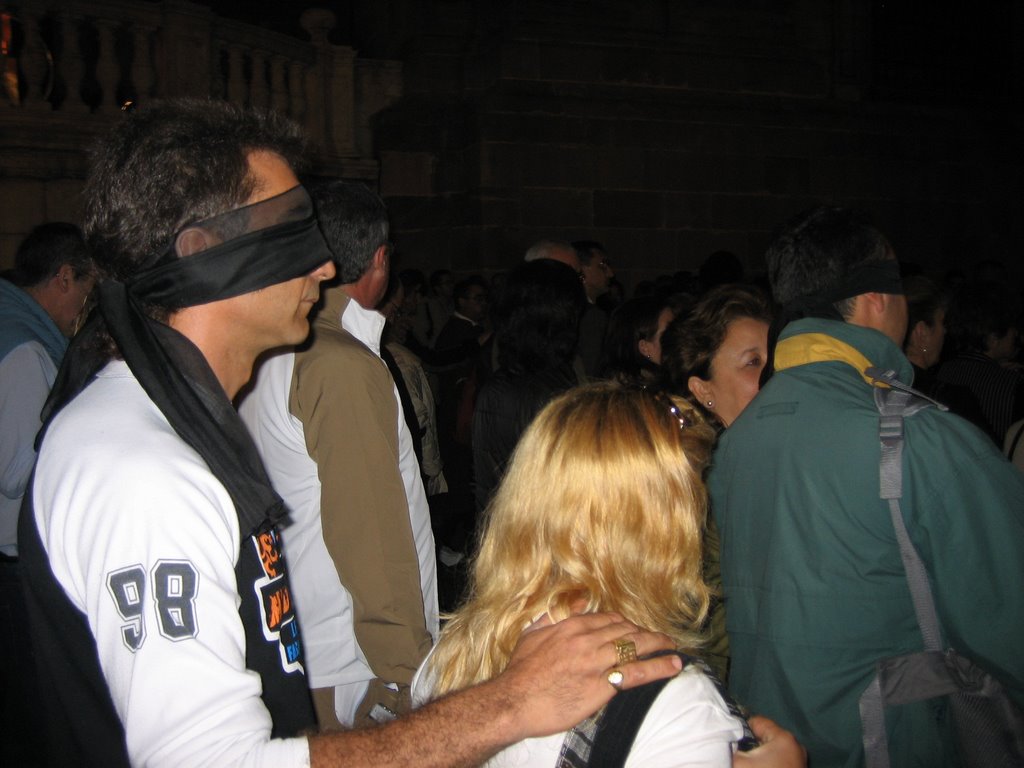
Some of the bearers walked bare footed some were blindfolded. Behind the tronos some followers were blindfolded or barefooted too, doing penance for their sins of the past year. Women as well as men.
Penitent
We like Malaga a lot. As we drove out westwards we saw a lot of the seafront is earmarked for redevelopment. Malaga is bidding for European Cultural Capital of 2016. To my mind there is no doubt it thoroughly deserves the accolade.

Cordoba

It was 27 degrees when we reached Cordoba in Andalucia. It was much hotter in the car, so hot that my husband, my even tempered and mild husband, really yelled at a local policeman not once but at least twice. This handsome young man was trying to redirect us away from the route Keith wanted to take to get to our hotel, which is right opposite the Mezquita. He must be used to tourist abuse as he didn't bat an eyelid, and he eventually acquiesced to Keith’s strident demands to go down a closed street!

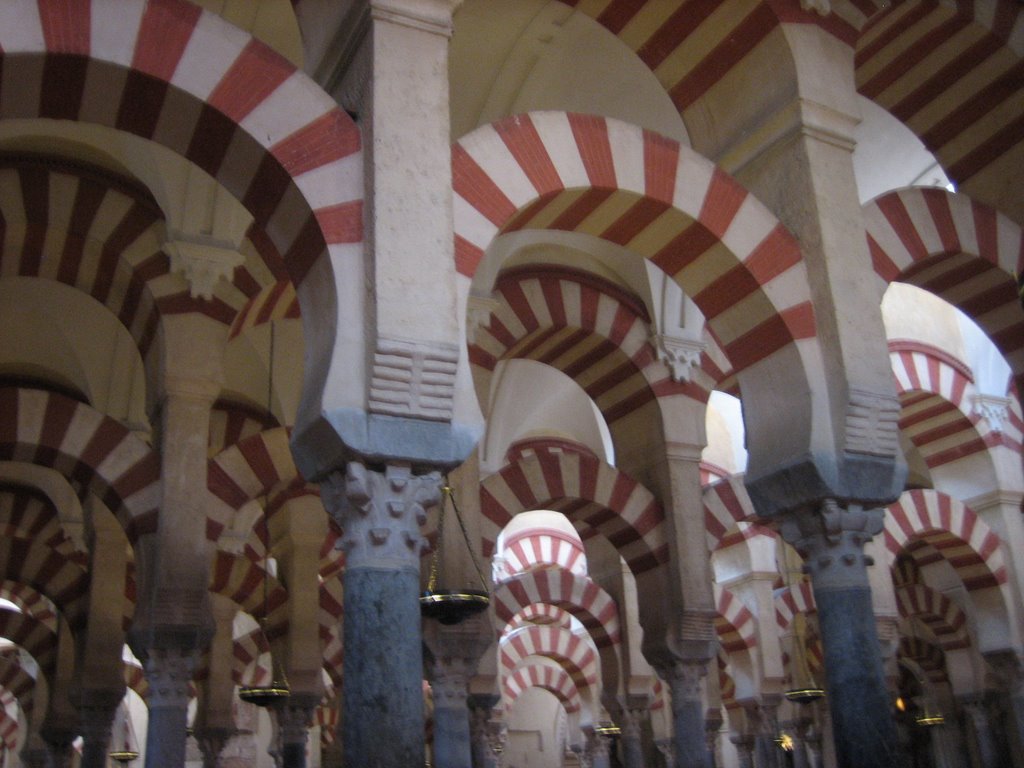
We got to the Hotel Marisa with enough time to dump our bags, cross the street and enjoy a wander round the phenomenal Mezquita. The Mezquita, an Arab Mosque with a Cathedral inside its core, has to rank in the top 10 of architectural wonders of the world. It is incredible.

The scent of orange blossom enveloped us as we crossed the cobbled patio to enter the cool hushed world of Abd al-Rahman who began to build the Mosque over the existing Christian basilica of San Vicente in 756. It was enlarged by Abd al-Rahman II in 821, Alhakén II in 961 and then Almanzor in the 16th century. The Renaissance Cathedral was placed in the heart of the Mosque in 1523 along with the belfry tower you can walk through to enter the Orange Patio. Once you could climb it to view Cordoba laid before you but it has been closed for restoration for so long now it would now appear to be a nearly permanent state of affairs.
Moorish arches at the Mezquita, Cordoba

The Semana Santa parades started on time, only to be disrupted by rain. The floats had to take shelter in the archway entrances to the Mesquita. The floats we saw in Cordoba had the bearers hidden away underneath the float. They wore special padded headgear when lifting and replacement men were stationed all along the route. The bearers slow measured steps are helped on by the steady beat of drums and the music of brass bands.
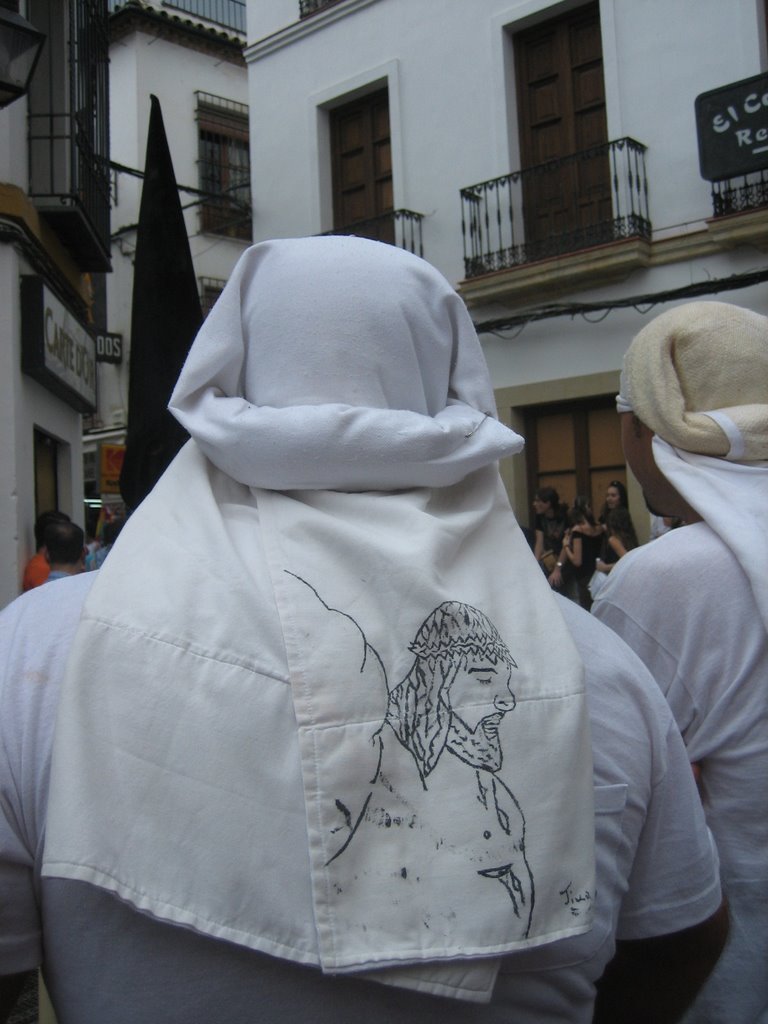
artistic headgear for Semana Santa

The floats were preceded by orders of Easter Societies, Cofradías, carrying their regalia. The ones we saw in Cordoba were dressed in white robes with black hoods or tall pointed hats. At first sight they appeared sinister, all you could see were holes in the hoods for eyes. The association of the robes and pointed hats with the Klu Klux Klan, promulgated by the American film industry, was hard to get over initially. However, the beauty and sorrow of the candlelit Virgin Mary float they carried around the tiny streets of Cordoba soon overcame any feelings of unease. The crowds were very appreciative of the skill of the bearers and when any particularly difficult corner was safely negotiated a ripple of applause would echo round the streets led by excited teenage girls, proud mums, and grans supporting their young men.
Semana Santa float in Cordoba, Spain

We had some great after dinner caberet in the street outside the Mesquita. There was a classical guitarist, a flautist and various other band members, they were seriously good, we stood and watched for an hour or so. Maybe they were warming up for the International Poetry and music festival the following week.

Cervantes, Don Quixote and Windmills

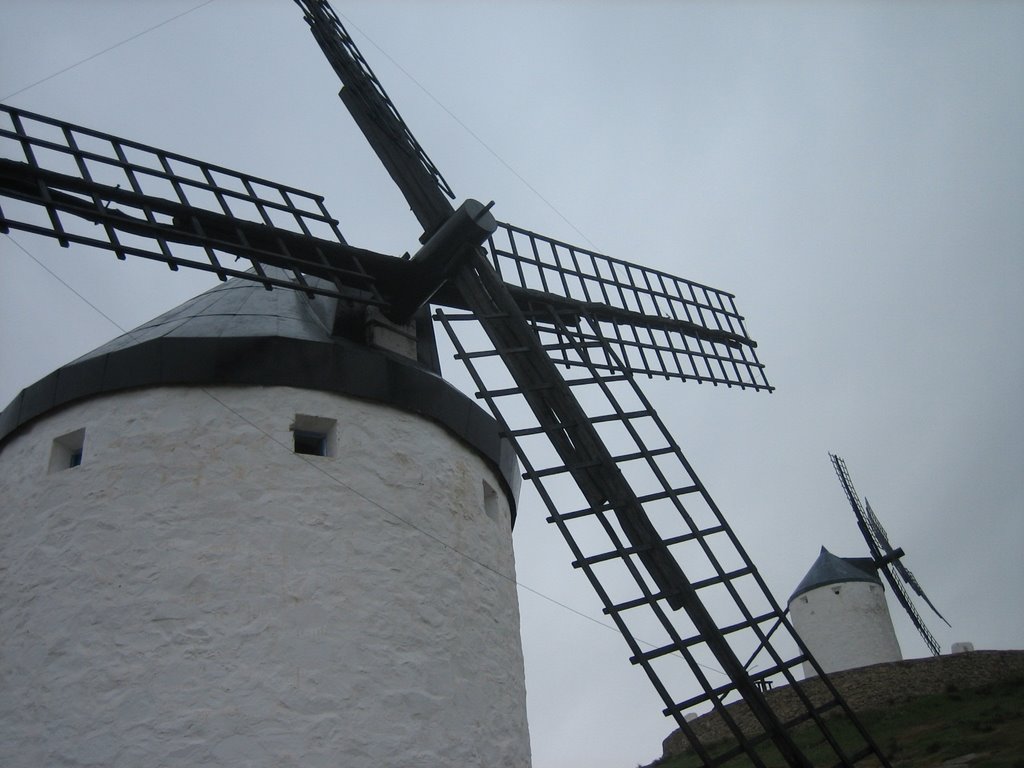
Don Quixote's windmills at Consuegra, Spain
Cervantes was writing around about the same time as Shakespeare, the early 1600's. Throughout Spain Cervantes is remembered in every town, streets and plazas are called after him, and references to his lovable hero Don Quixote abound.

I have got an e-book of Don Quixote as my holiday reading, (see my links in side column) but we have been so busy I have only had chance to read a couple of chapters so far. I think it will probably have to wait till we get home now. After leaving Toledo we drove through La Mancha - where Don Quixote rode up and down the little hills that scatter the province and attacked windmills, thinking they were giants. We stopped at Consuegra as there is a collection of conserved windmills, they weren't turning - they don't need to now. The giant, tall, thin, modern ones do fine work and Spain is now the second largest producer of wind energy in the world.

Wednesday, April 12

The Toledo Throngs

This morning in Toledo I squeezed our breakfast orange juice, just like I did yesterday. Well I fed oranges into a squeezing machine and out came juice. 4 oranges = 1 glass of cold fighting, full of Vitamin C, orange juice. A good start to the day. We needed all the sustenance we could get to cope with the huge groups of aimless, bewildered day trippers that thronged the narrow Old Town streets. Toledo is roughly an hours drive south from Madrid and judging by the amount of coaches parked in serried ranks outside the city walls it figures high on the 'Sights to See in Spain' Top 10.

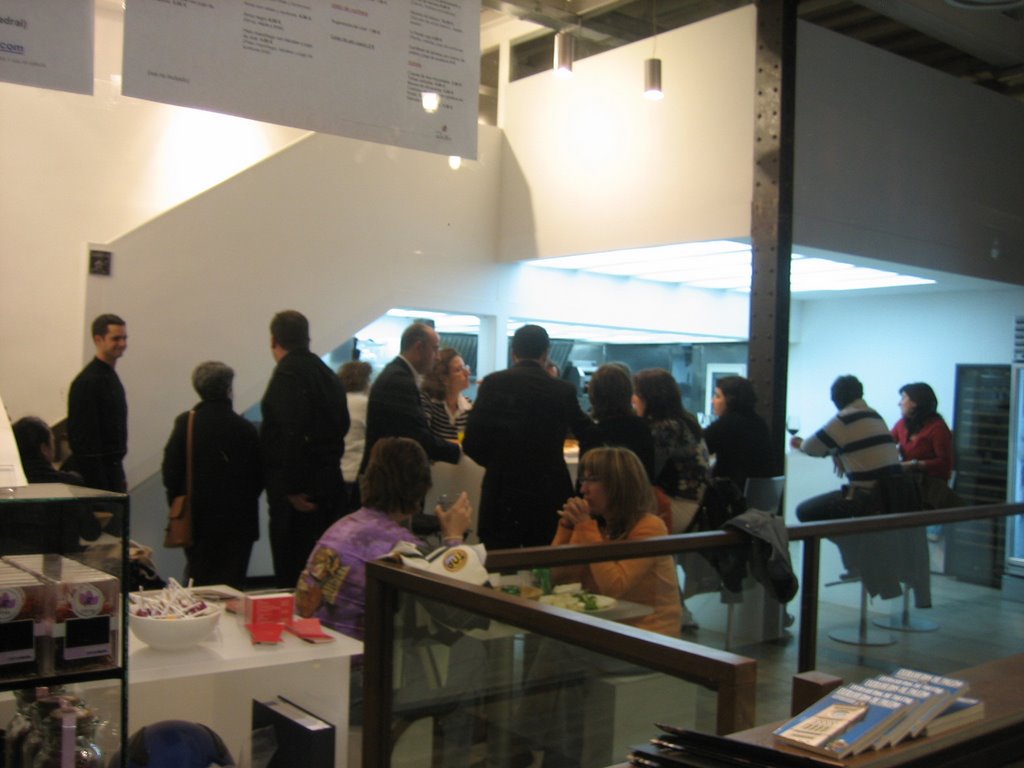
My Top Tip for Toledo is stay overnight, do your sightseeing early in the morning and again in the evening when you don't have to fight your way through the hordes. It is another (oh how blasé am I ...) World Heritage site, it used to be the capital of Spain before Philip II decamped to Madrid and it deserves a little attention. Have a long leisurely lunch followed by a siesta and miss the crowds. You also get a chance to sample the cool vinotecas.
Toledo vinoteca
Toledo vinoteca

There is an imposing Cathedral and an Alcazar, both of which dominate the city skyline. We stayed about a 10 minutes walk away, on the other side of the Old Town, in the Old Jewish Quarter - can you imagine part of London being called that, the outcry, the claims of racial discrimination that would follow. Here it is appropriate, it gives a sense of history and important definition.
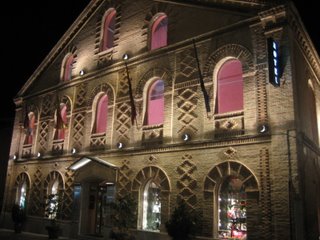
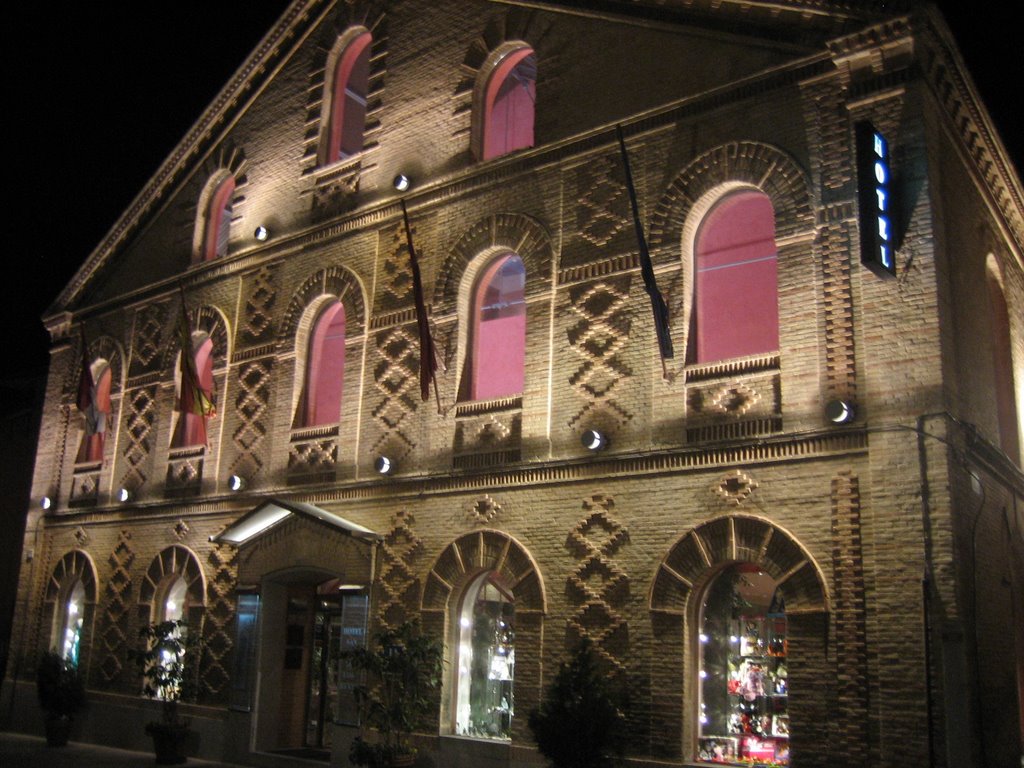
Our Toledo hotel was a converted flour mill

We visit the two remaining synagogues, the one on Samuel Levi street is free with displays of artefacts and information sheets in various languages. It touches on the wider issues of the diaspora and the subsequent expulsion of Spanish Jews as a result of the Inquisition. The second and older synagogue as its name, Santa María la Blanca, would imply, has had a chequered history. There wasn't much information available and we were sharing the building with at least six different coach parties, each with its own guide that gathered its group together and then proceeded to bellow an account of the place at them in various languages. From being a Holy Place it became a sort of Bedlam. We made an escape of sorts to the nearby Franciscan Church of San Juan de los Reyes that Ferdinand and Isabel gave patronage to in 1476. It was where the Inquisitor General, the Archbishop of Toledo hung out.

No visit to Toledo is complete without seeing some El Greco paintings. A house and museum near to where he lived and worked in Toledo from 1585 displays a series of The Apostles, The View and Plan of Toledo, the Tears of St Peter and the altarpiece of St Bernardine who has a small head on a strangely elongated body, the whole piece being shades of grey.

More art can be enjoyed at the exquisite Roca Tarpeya, the home and workshop from 1953 of Victorio Macho and which is now an exhibition space and headquarters of the Real Fundación de Toledo. It was a peaceful oasis with gardens that looked out over the River Tagus and the XIII century Puente de San Martin, to the Cigarrales and the countryside of Castilla y La Mancha beyond.
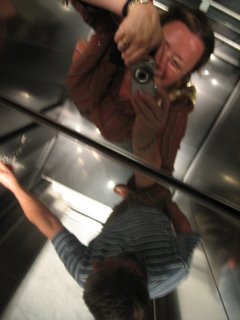
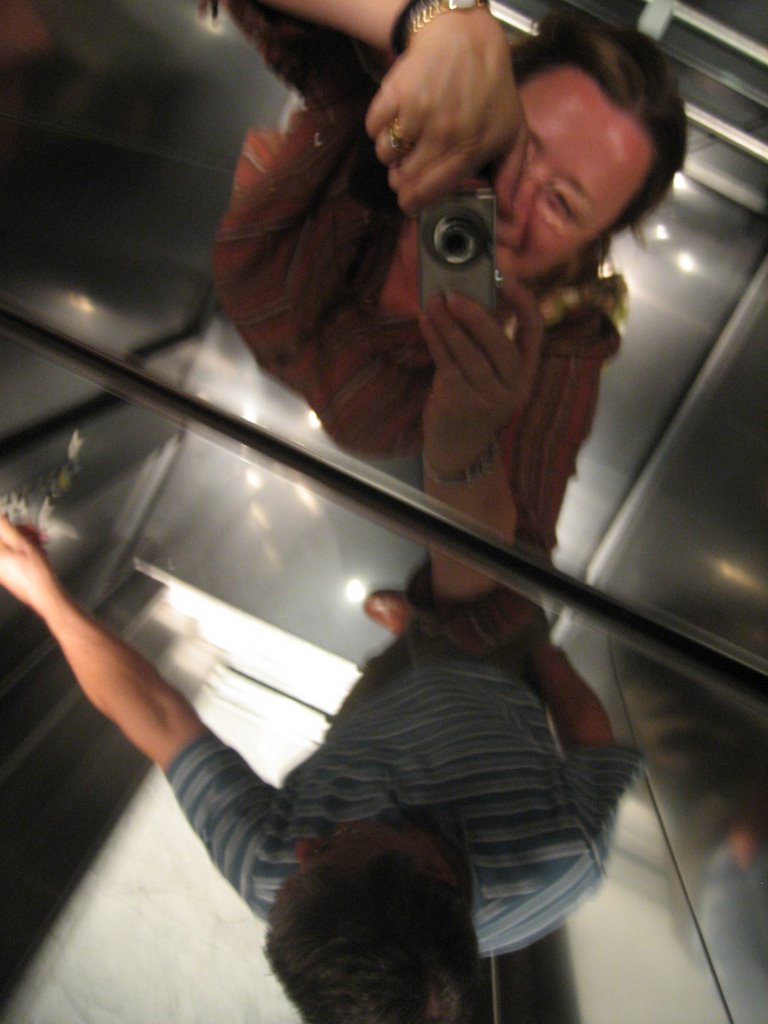
Us! In a lift!
Yup .... its us!

Tuesday, April 11

Semana Santa Starts in Salamanca

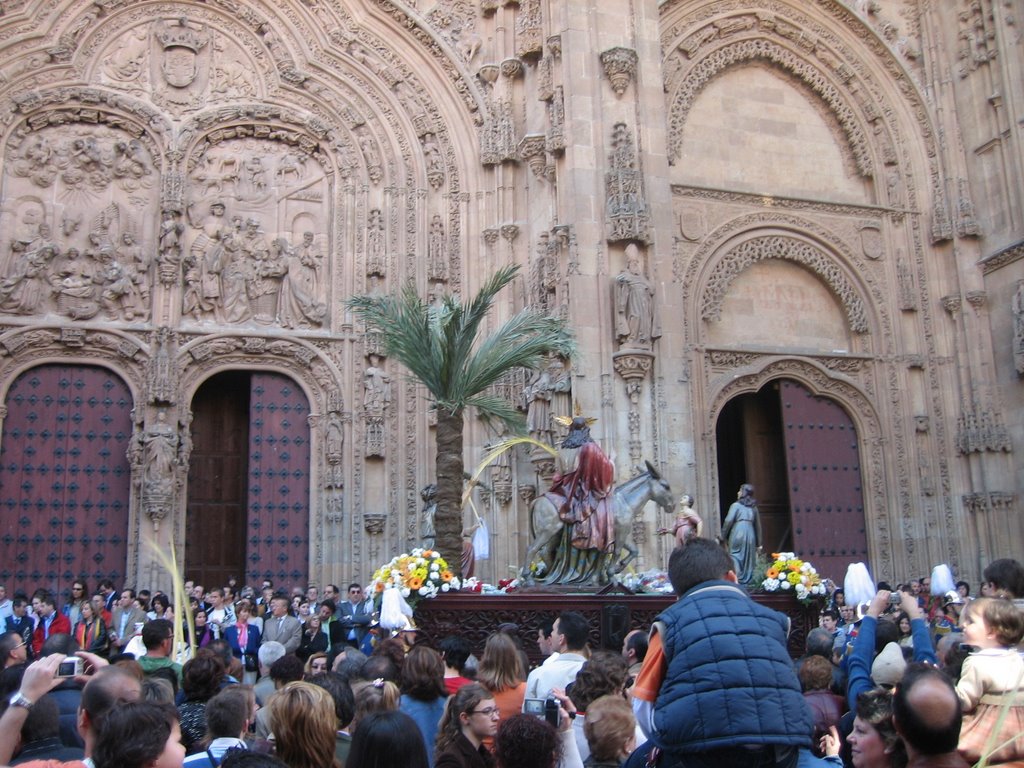
Salamanca start of Semanan Santa
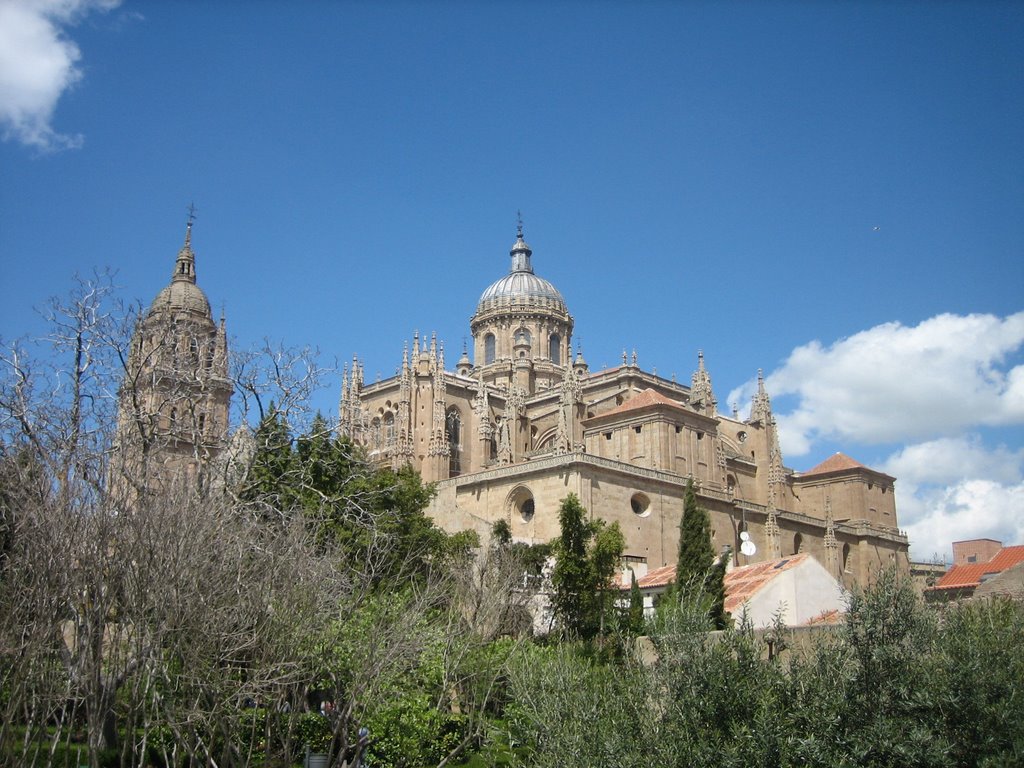
Semana Santa, the traditional Easter Week parades, starts for us in Salamanca with a Palm Sunday procession during the day especially for the children. Salamanca is our favourite city so far. Like Segovia it is a UNESCO World Heritage city built of golden coloured stone. The ancient University buildings, the oldest in Spain founded in 1218, jostle with the Cathedrals - both old and 'new', we are talking 12th and 16th centuries here. The nearby Plaza Mayor is magnificent and full of life, the whole town has a really good buzz about it.
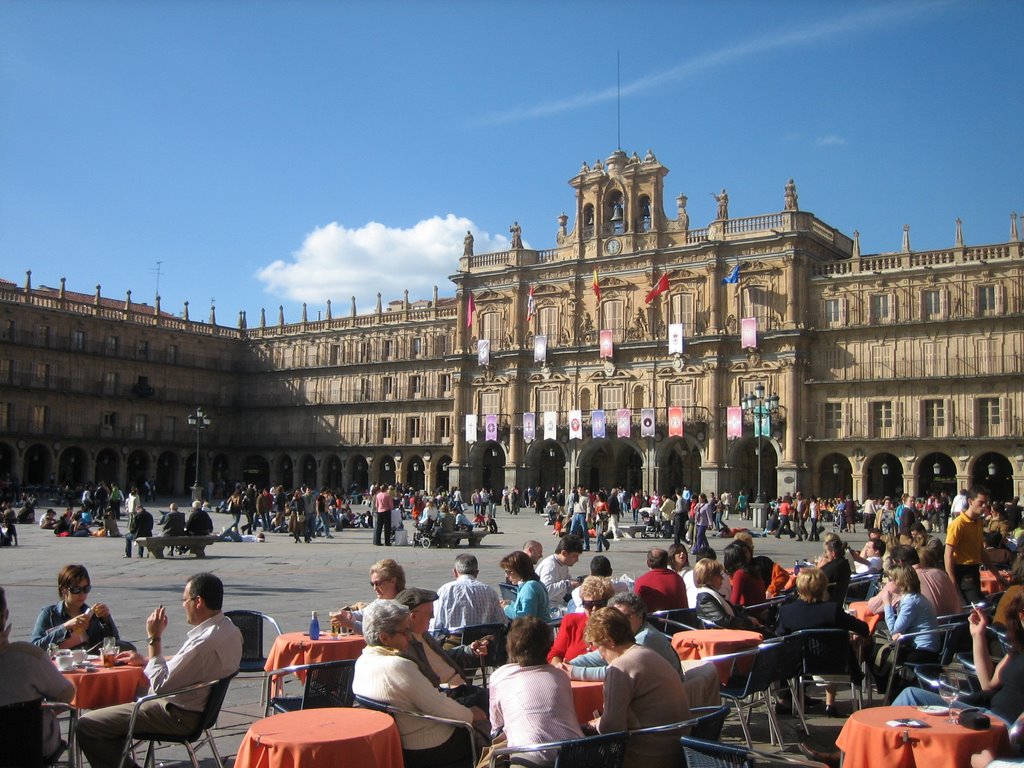
Plaza Mayor Salamanca
We take time out from sightseeing to window shop, there are some fabulous Meubles - furniture shops, and we dip into the great Museuo Art Nouveau y Art Deco. Next door are the Archives of the Spanish Civil War, there is an interesting art work by Robert Silvers who recreates Picasso's Guernica from photos of all the archives, very clever. The majority of the rest of the exhibits were Masonic regalia including what they describe as a 'salon', basically a Masonic temple. Apparently (and please bear in mind there was no English in this museum so I may well be way off course) the Masonic secret society provided a ready made network to fight against fascism in the Guerra Civil Espanola. I never cease to be amazed by what I have no idea about!

The weather is hotting up in Salamanca and we sun bathe whilst drinking our coffee in the Plaza Mayor. The locals are still in jumpers and coats, it is after all only April! But these are peeled off as the day progresses and the heat builds up. Storks are still busy repairing their nests all over the city, they flap lazily in the azure blue sky, their legs dangling ungainly behind them. It is here that I have a disgusting cold. Had to buy pastillas from a Farmacia for a raging sore throat.

Our hotel is the Palacio de Castellanos. An expensive 4 star hotel set in a 15th century palace facing the Convento de San Esteban. From our third floor bedroom we can see both the Convent and the Cathedrals which are lit up at night and are fabulous. The entrance is a cloister which has been glazed in to form an arresting reception area and drawing room. Accommodation was hard to find for Saturday night so we decided to splash out, which is why we are here, it is a fantastic location, very central. It doesn't tick all my boxes though as it charges through the nose, 12 euros a day, for an unsecure wi-fi connection to the internet. Whatever next - 4 star hotels charging for pay as you view TV? Needless to say I didn't connect here!

Salamanca

Monday, April 10

West Galicia - Mejillones

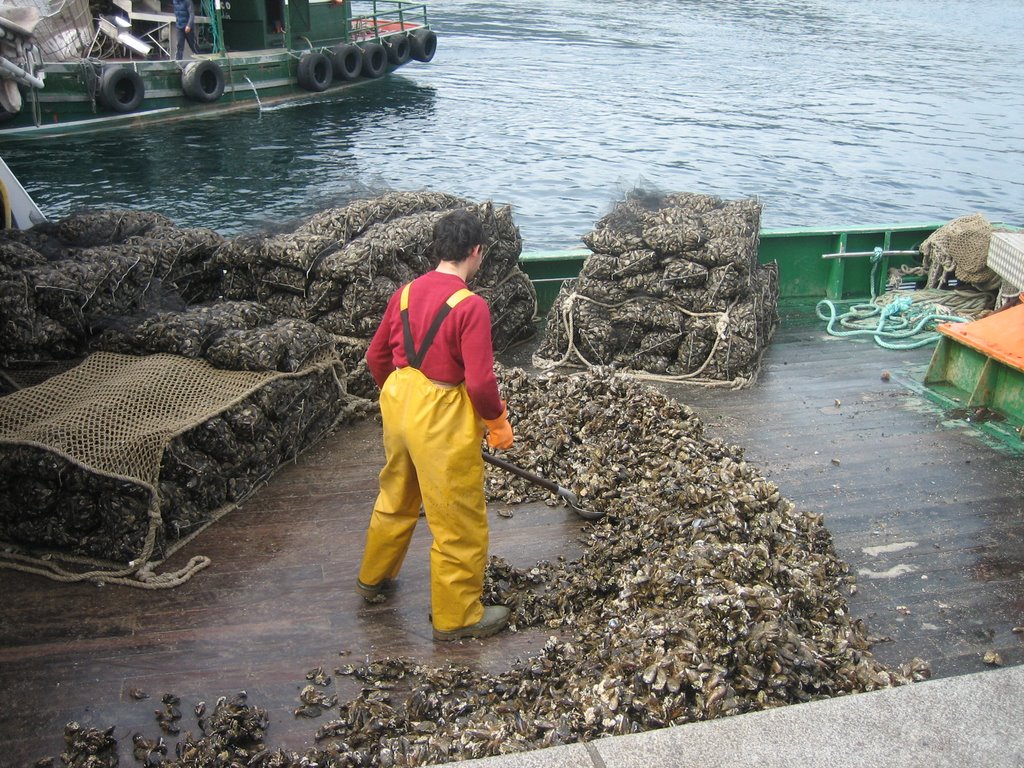
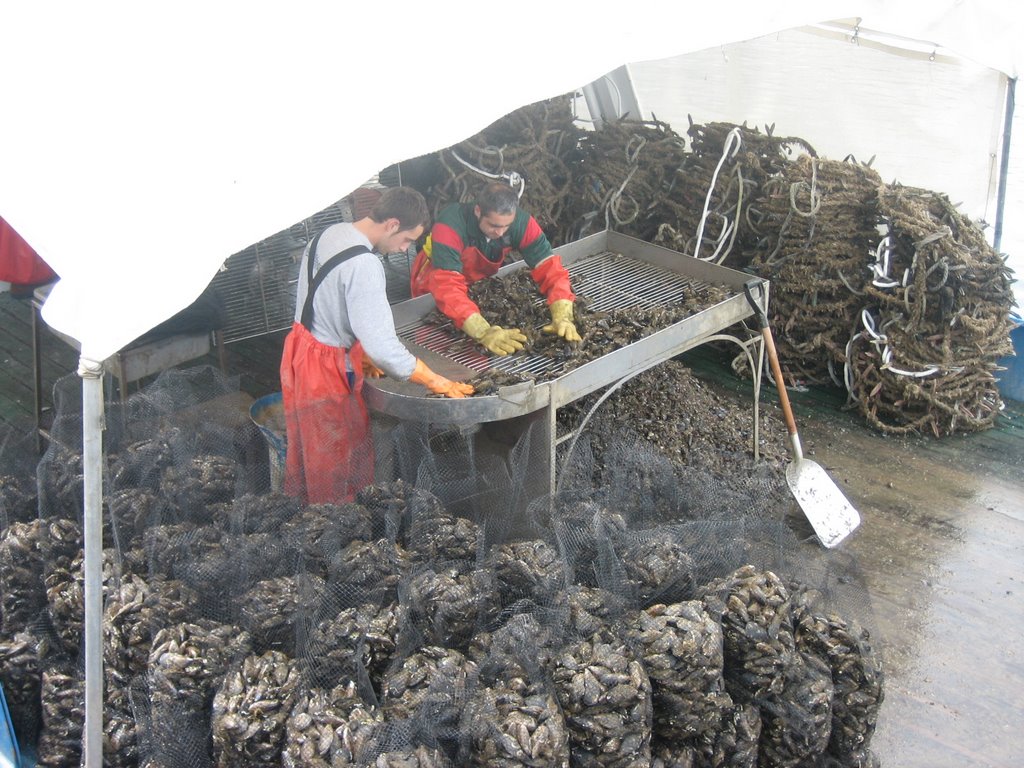
The west coast of Galicia is very different to the north coast because it is more developed, both as a holiday area and with small pockets of industry. The climate is more favourable than the windswept rugged north. There were a series of cove like beaches on the Rias with a number of fishing ports. We drove round the Rías Pontevedra and Vigo, both are big mussel farming areas. Rias are basically sea inlets, a bit like Norwegian fiords. We watched a couple of mussel boats come in from harvesting the mussels at Porto de Aldán. The mussels are grown on ropes hanging from hundreds of wooden platforms moored in the Rias. The mussels were cleaned and sorted, put in net sacks and loaded onto waiting lorries that proudly proclaimed they were carrying 'Medjillones de la País Gallego.'
mussels on deck at Porto de Aldán
cleaning and sorting mussels at Porto de Aldán
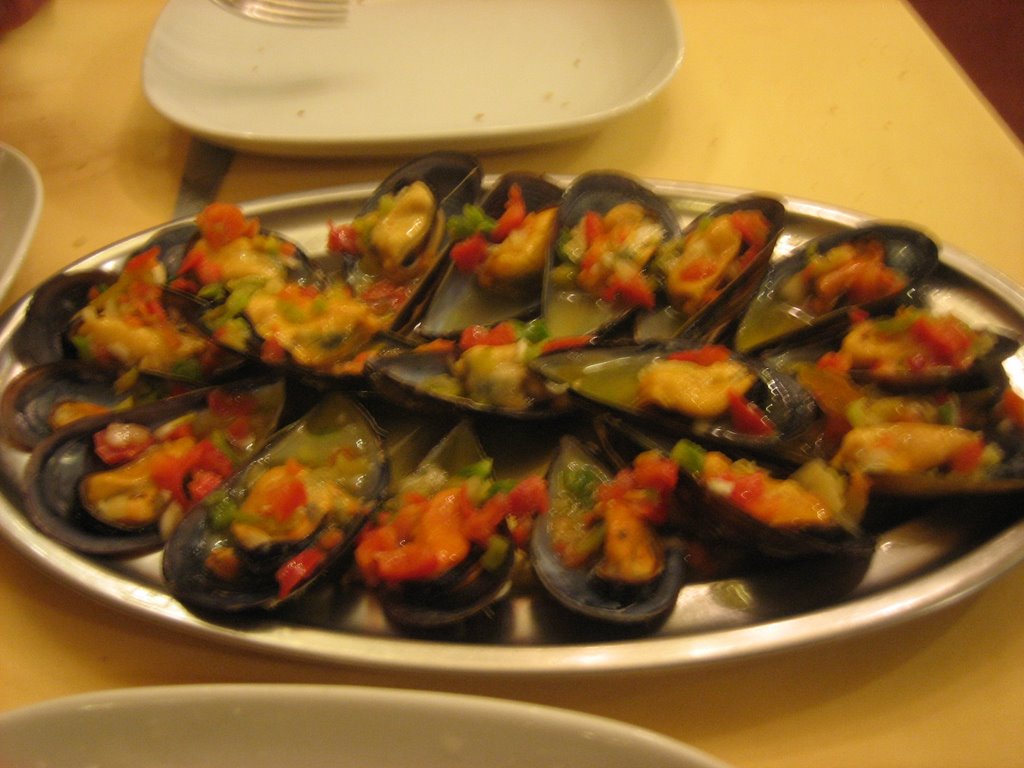
yum!  Mejillones / Mussels

Santiago de Compostela

Cathedral Santiago de Compostela
There is nothing I can add to what has already been written about Santiago de Compostela. It is one of the three most sacred sites in the Christian world, the others being Rome and Jerusalem. It has received millions of pilgrims for hundreds of years, all coming to pay homage to the remains of St James the Apostle. The Catherdral exterior has a patchwork of lichen and mosses on it, the stone carving is stupendous. We spend most of the day gazing at a myriad of chapels, and cloisters. We also see the silver casket holding St. James' remains and we file past the back of the High Altar. Here pilgrims kiss the cape of St James. They then make confession in one of the wooden confessionals which are lined up on both sides of the long nave, elderly priests ready and waiting to hear their sins. There are tapestries of Goya and Rubens to marvel at and a small statue by Miro sits incongruously, nearly lost amongst everything else, in the room next to the magnificent library.

I spy a St Ann, I'm not a Catholic, but knew she was Mary's mother. There is a beautiful statue of the three generations; Ann, Mary and Jesus, To understand all the religious iconography must be truly rewarding, but perhaps it would detract from the plain old awe we felt, and perhaps awe is what the works are designed to evoke. But it would be nice to know a bit more.

Later the same day, by way of a total contrast, and dare I say a little light relief, we dip into a technology exhibition, galicia dixital. It caters mostly for parties of school children. At 6.00pm we had the place to ourselves, which was just as well as a so called 'grown up' made a complete spectacle of herself by screaming the place down while watching 'The Vertigo' - a 3D rollercoaster ride from the roof of the cathedral. Its one of those things where you wear the special glasses, the seats move and wind howls past you. Harry Potters game of Quidich is very tame by comparison! It ends as we swoop through the front doors of the cathedral, up the nave, down, down into the Crypt and then out into the fires of eternal damnation where we are unceremoniously dumped! Fantastic! Interaction at its best!

Viveiro

We stay the night in Viveiro which reminds me a bit of Padstow, because the town is on both sides of a river. The old town is attractive and has a lot of good examples of pretty white painted enclosed balconies. As we stroll around we come across a Lourdes like shrine. A statue of the Virgin Mary is set in rock and underneath dangle what I can only describe as an assortment of plastic limbs. I'm not clear if these represent petitions for a miracle or are confirmation of one taking place, either way its hard not to think we are viewing an installation of a work of art by one of Damien Hirsts' cronies.
Lourdes niche at Viveiro
Our hotel, the Hotel Orfeo, is very comfortable. Our room has a balcony and great views of the river. In our bathroom the bidet tucks away under the sink as a space saving measure and swings out when needed, its really neat, I haven't seen one like that before. There is internet access in your room but it costs 3 Euros a day, being a total skinflint I opt to use their pc in the lounge for free. It is a tad disconcerting to see Blogger all in Spanish!

The following day we visit the most northerly tip of Spain, Punta de la Estaca de Bares. In the small hamlet before the lighthouse the potatoes are a lot further on than ours in the UK. As gardners we can sympathise with their bird scaring attempts and are familiar with similar controlled burning of gorse. We continue onto Santiago de Compostella.
Bird scaring & gorse burning @ Punta de la Estaca

West to Galicia

We've drunk the sidra and now we have driven past a host of small apple orchards on the old road, the N634, out of Oviedo. The apple trees are all in bloom and are beautiful. Frothy clouds of white and pink blossom contrast with the lush green pastures of the lower slopes of the Asturias. Its I-Spy the flower in bloom time; we spot masses of wisteria, iris, lillies, and camellias as big as trees, amongst many. We think this north west area of Spain is at least 3 weeks ahead of southern England in terms of flowering time.

We also see buildings which we have no idea what they are. They are square, wooden, have a balcony running all around them, and are mounted on staddle stones above a small outhouse type of building to effectively form a second floor. Some look like they may be inhabited, with electricity and tv aerials, but the majority are in poor repair. Later when we get to Galicia we see traditional grain storage buildings which are rectangular, raised on pillars, sometimes very high to form an imposing gateway. Now they are are also used for other types of storage - we spotted one by a river used to keep canoes in. Another different architectural feature we encountered on this part of our journey is the use of slate for roofing held down by rocks or in some instances pyramid shaped stone.
wooden building on N634 near Oviedo, Spain
ancient grain storage building, Galicia Spain.
As we climb higher we enter forested areas of predominantly pine and eucalyptus, we wind down the car windows and breathe deeply, the scent is intoxicating.

We reach the coast at last only to visit yet another cathedral! This one is very different, and is one of natures finest - the Playa de las Catedrales at Bajamar, east of Foz, which the Xunta of Galicia have declared to be a natural monument. They have spent money on a boardwalk all along the headland, presumably to ease clifftop errosion, a lovely bracing walk.
Playa de las Catedrales

Sunday, April 2

Strategy, El Red & the Sidra!

elegant buildings in OviedoOviedo has an elegant charm and we should know, we spent a long time driving round looking for our hotel today! We have been incredibly lucky up until now. We've hit town and found our hotels with no problem. Perhaps we were becoming slightly smug with our strategy - choose a hotel close to a Cathedral as it is generally easy to see and well signposted, thus the hotel is easy to find. This was not the case in Oviedo - the one way system, few signs, no street names, and pedestrianisation conspired against us! As we passed the pretty San Fransisco Park for the umpteenth time we had time to note that the tulips are out here and leaves on the trees have just unfurled revealing their brand new greeness.

Anyway we are here now, tucked away in the Hotel Cuidad de Oviedo. Its part of the same group as the one we stayed at in Segovia. All the hotels we have stayed in, which although very comfortable and just right for us, are not in 5 star luxury category by any means, but all have had high speed internet, el red, facilities, amazing. Can't see that in Britain. I think Spain is way ahead in the digital roll out. I've just been able to connect up, with and without wires, using my laptop. In Oviedo they have given me an ADSL adaptor to plug into the phone socket and hey presto I'm away with free web access.

The hotel is a short stroll to the Sidrerías - these are bars/restaurants that specialise in cider, Sidra. This evening we have had to investigate the local culture. The Sidra needs to be poured by the waiter from a great height, presumably to aerate and make it palatable, so the floors inside these establishments and the pavements outside are awash with the Sidra. You can smell them well before you get to them! It was OK but I'll stick to the other local produce - wine!

León Postscript

Stupidly I worried that nothing could match Segovia. I was wrong. León is just as fascinating, if not more so.

Its old town is not as pristine as Segovia, in fact you could call the Plaza Mayor area seedy. Beautiful, but decidedly run down. We had a great time reviewing the glorious past but our trip also deals with today. León today continues to develop its architectural heritage with fab buildings such as an early Gaudi edifice, the Casa de Botines and the modernist Auditorio Ciudad de Leon.
Gaudi's Casa de Botines, León
Auditorio Ciudad de Leon
There were few, if any, American tourists evident, unlike Segovia, and we only came across two English old dears. We joined Spanish speaking groups to visit the Cathedral cloister musuem and the Panteón because the museums are only accessible this way. My basic Spanish gets us by and language hasn't really been a problem.

I'll also remember León as the place where I eventually lost my Wi-Fi virginity, courtesy of Hotel Paris, and for its brides. Today we saw two. One lovely couple had been hitched at the Town Hall, the Ayuntamiento, near Gaudi's building, their photographer was taking shots outside. We inadvertently gatecrashed the Wedding service of the second couple as we wandered around the chapel next to the Parador.
Keith and his mate Gaudi